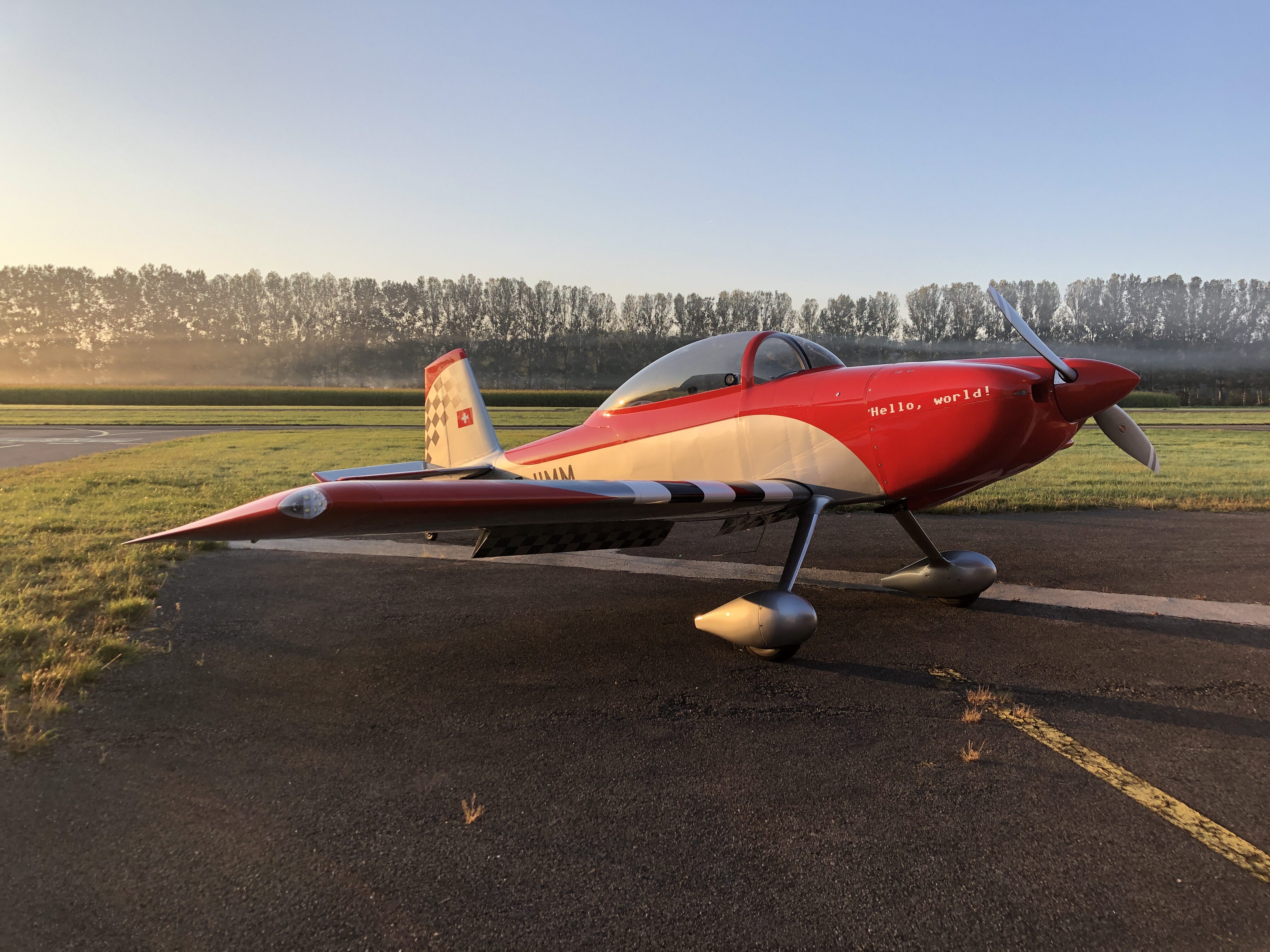


Sun, Oct 19 2008 @ 15:39 in Switzerland
Contributed by: Mick
Views: 698
Europeans are now requiring Mode-S transponders, so I need to sell my Narco AT155.
It is brand new, never even powered up, and includes all mounting hardware.
I don't exactly recall what I paid for it, but I believe it was around $1100 USD. I'll take $900 USD, and I'll ship it to you. Please contact me at the following address:
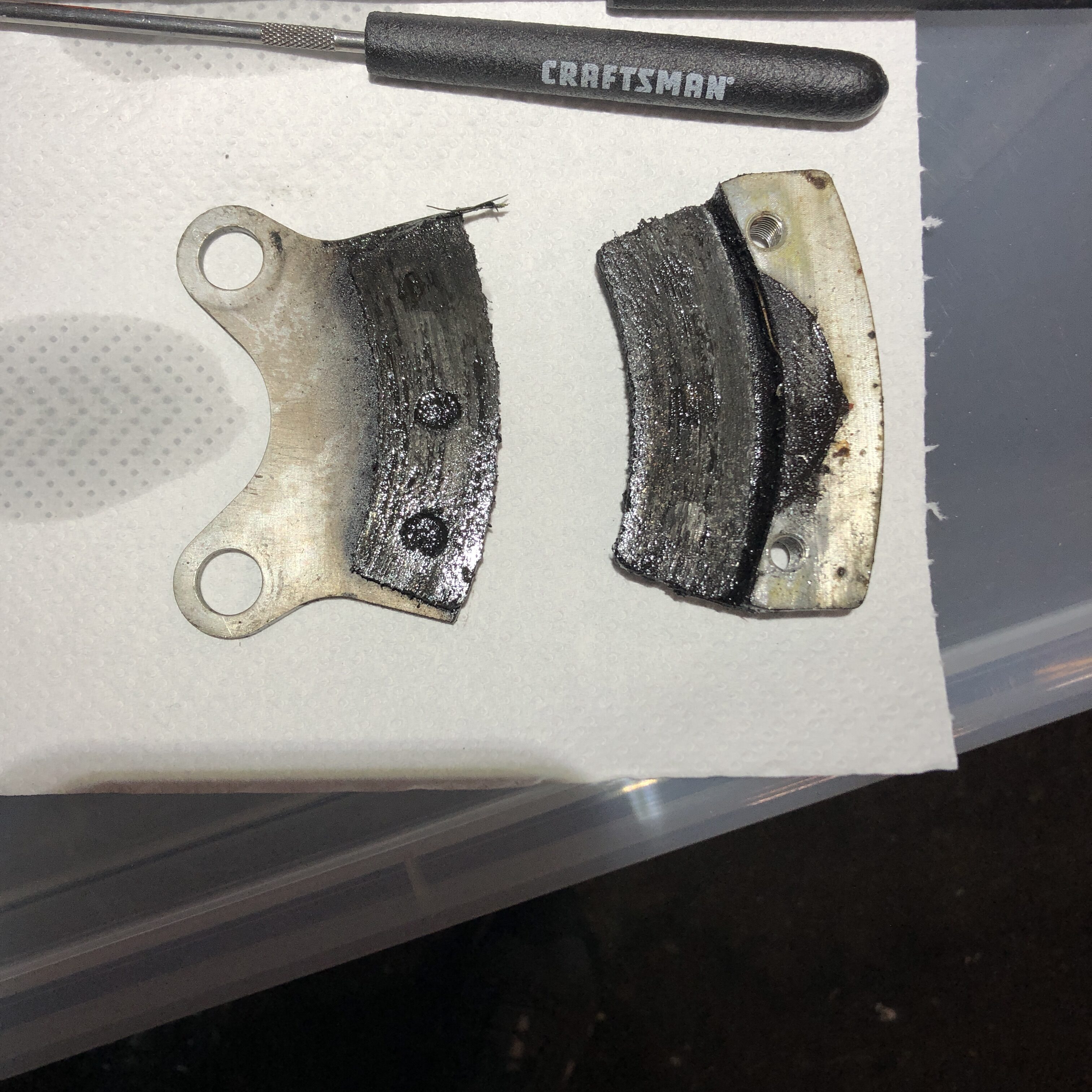
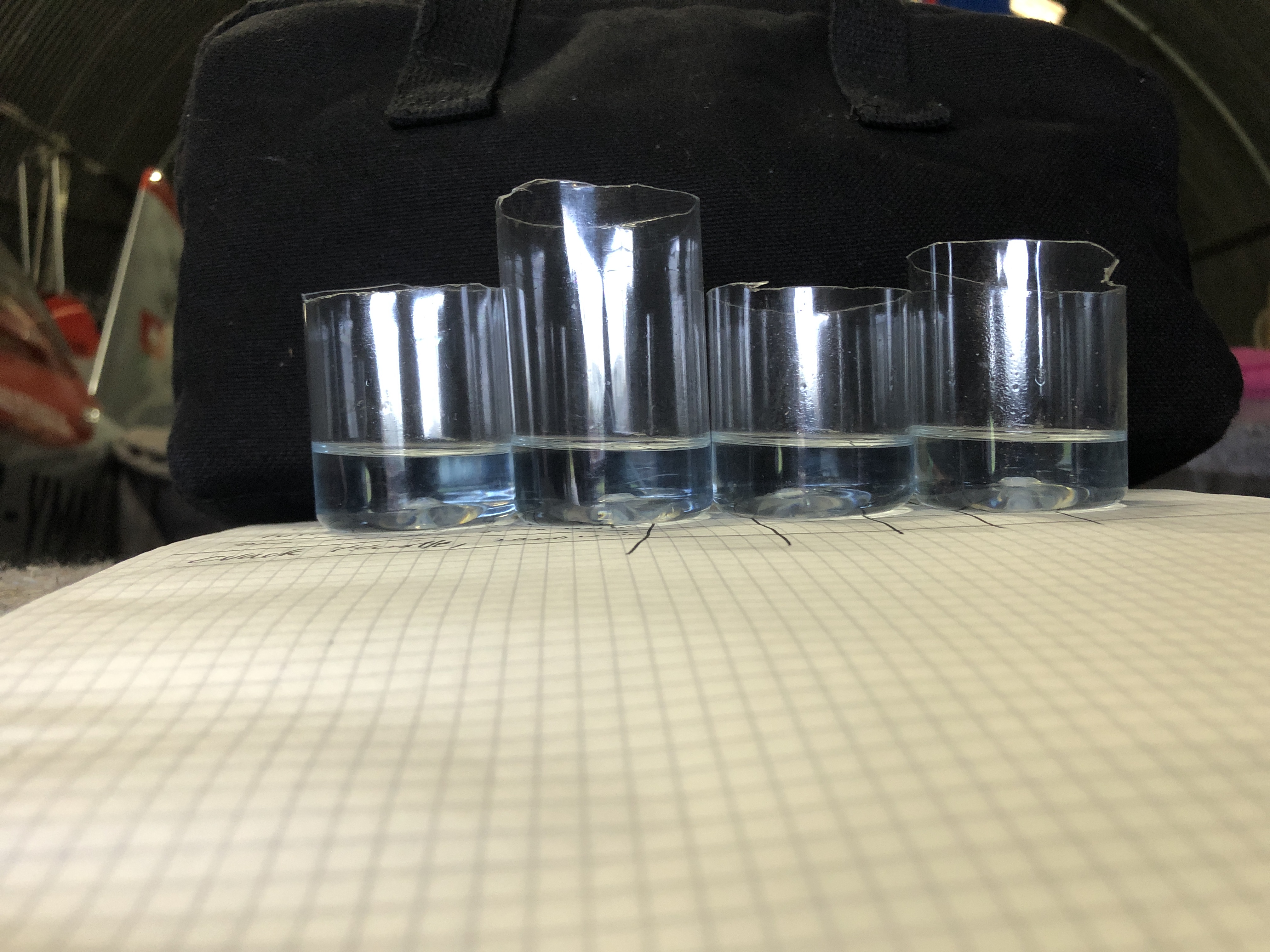
I had my panel laser cut by a guy in Idaho recommended by the epanelbuilder.com website. I believe the price was pretty good, around USD 100. The problem is that the laser seems to do quite a bit of burning through the aluminum. I've attached some photos. I'd recommend going with a company that does water jet cutting instead of the laser.
Here's the current view of my instrument panel design. The panel is out to get cut right now at http://www.experimentalair.com/ using their high tech water jet cutting machine.
I picked up the 2.25" altimeter that I might use. I have not yet taken it up to see if it works right, or brought it to a repair station. I need to do this. It is military surplus NSN 6610 00 781 4197. Aerosonic P/N: A80-AAU-16/A
Here is an image that shows the sizes for many of the round instrument panel cutouts. I had a bit of trouble finding this, so I thought it would be useful to post it here.
The purpose of this tool is to quickly and easily design the contents of the two user-definable pages on the EIS4000 engine monitor. You see the "virtual" EIS at the top, and the draggable data widgets at the bottom. There are over 50 widgets, representing all of the data types that the EIS can display. By dragging these data widgets, you can assemble your perfect user-defined page.
Wed, Aug 24 2005 @ 04:48 in Switzerland
Contributed by: Mick
Views: 2,117
Do I need to do anything about a 2-3 Hz joystick oscillation that does not damp, caused by activating the aileron servo while the airplane is on the ground not in motion?
Thanks, guys,
-Bill Boyd
From: Jerry Hansen
Subject: RE: servo oscillation
Bill, that phenomenon is caused by the very narrow "deadband" in the Navaid servo. It is seen in some, not all, aircraft with fairly massive counterweights in the ailerons. It also varies with how free your controls are - i.e. if you have a little friction in the system it will probably damp on its own (not that I recommend putting friction into your control system). It can be eliminated or reduced by opening up the deadband area of the servo (an internal potentiometer adjustment), but his will also affect the responsiveness of the servo somewhat and reduce its performance characteristics. If you can tolerate the stick shake on the ground, I would say to leave it alone and get the better performance in the air.
What is actually happening here is common in classic servo systems that are "underdamped", often for better response. When you turn the servo on (on the ground where there is no airload on the ailerons) the servo will move the ailerons to the neutral position. Because of the mass in the ailerons and the rapid movement of the servo it will reach the neutral point but the mass will cause it to overshoot a small amount. This will generate an error signal causing the servo to rapidly correct in the opposite direction (again with a small amount of overshoot). As this process repeats, you get the oscillation that you mention.
The narrow deadband does give the servo the ability to react quickly (as in turbulence) and to input very small corrections to the controls for extremely fine tracking control.
We can give you directions on how to reduce or eliminate the effect if you want. However, as mentioned, It may reduce the performance some in the air. Because there is no need to turn the servo on while on the ground, except for the preflight check, you shouldn't find it to be a big problem in normal operation. It will definately not harm the autopilot system in any way.
If you'd like more information, please let us know.
Best Regards,
Jerry Hansen
Trio Avionics
http://www.trioavionics.com
Phone - 619-448-4619
Mon, Jun 27 2005 @ 06:03 in Switzerland
Contributed by: Mick
Views: 2,746
I contracted with Aircraft Simulators to do some labels for my panel. I did the design in Visio, and sent them both Visio and GIF files.
The results are excellent. The panels turned out exactly as I had hoped. Here are some pictures.
Here you can see the back. If you put light behind these panels, the light will show through so you can read the letters. Very slick.
The prices were excellent, too. Something like 25 USD for the big panel, and less for the smaller panels. I'm sure I'll get some more panels from them when I finish up my instrument panel.
Tue, Mar 29 2005 @ 08:17 in Switzerland
Contributed by: Mick
Views: 4,141
I recently sent a note to PS-Engineering asking them why I should buy their product instead of the Garmin GMA 340. Below I've pasted the response, but I took out the exact names and other identifying information from the notes.
Dear Mickey:
> Since the 8000
> is a lot more than a GMA340, what features does the 8000 have
> that the GMA340 doesn't, that would make it worth the extra
> money?
Actually, the cost is not a whole lot more, especially now that the price
of the GMA340 has gone up another $100 at the beginning of 2005.
The price difference is now about $300.
So why would you want to spend $300 more? Here are a few benefits worth considering:
1) IntelliVox. Our automatic VOX circuit.
In fact, just starting yesterday, a person asked about the differences between
the GMA340 and our PMA8000. I have copied it below, this is what pilots are saying:
This past week I listed on the net, a letter, asking for recommendations on
passive headsets to be used with a proposed installation of a Garmin GMA 340
audio panel.
I received many, welcome emails, some of which also included suggestions that
I consider the PS Engineering 7000 and 8000 Audio Panels instead of the
Garmin.
I went back to my radio shop for a discussion on this subject. They prefer
the Garmin because of the manual squelch, versus the PS "IntelliVox" which is
an auto-squelch system.
I retired 4 years ago from a Part 121, DC-8,747, DC-10 background where I had
the pleasure of flying top line equipment, which had auto squelch with the
capability of turning off if necessary. I don't see the PS product allowing
that option.
One part of the PS pilot's guide addresses the problem of air flow from a
vent possibly creating a problem in squelch operation. Here in hot Florida the
overhead air vents in my bonanza are needed and occasionally, my right seater
positions herself in the way of the air flow which creates noise. I am
wondering if this may be an issue.
Would like to get some more input from you who operate both the Garmin and PS
systems.
My radio installer is more than willing after I install the Garmin and
operate it a bit, to replace it with a PS panel since it is only a plug in
replacement, and compare. The PS is a bit more money, but at least I could get a good
comparison.
Again, many thanks in advance.
Paul
Paul-
We have the 340, but I wish we had the PS. I like the autosquelch, and I
like the better music volume. The other featurs are comparable, so I don't
see a downside.
I have NEVER heard anybody complain about the autosquelch. Most folks seem
to think that is the best feature of the PS unit.
You might call the PS folks to see what aircraft have the airflow noise
issue -- I doubt that the cabin vents in a Beech have enough air flow volume
or velocity to be a problem... but they ought to be able to give you better
insight into that.
I'd suggest going with the PS, then trying the Garmin later.
-T. H.
Ventura, CA
Paul, I have the gma 340 and continue to have intermittant side tone
issues with a mk12d+. We have done the Narco mods with no joy. Local
shop tells me the PS is a much finer panel.
I am going to be selling the MK12D when I do my upgrade to solve the
problem. From what I understand, the Garmin radios do not have this
issue.
I will be keeping the 340, but if I had to do it over again, would go
with the PS product.
rns
I have the PSE 7000, and if you point the overhead vents right at your
face you do get airflow noise. However I have never had a problem
positioning the vents so that I got the full benefit of the vent
without having it blow directly on the microphone. But you will
occasionally lean or bend over and put yourself in the airflow from
time to time and get the noise. It's nothing that I would consider a
problem at all.
-Gary
I posted this sometime ago when the Garmin vs PS discussion came up:
When I was replacing my audio panel I considered both of these units.
The shop that did the install felt they were both good units and did
not push one over the other (must have the same mark up too). They did
say that the PS might have the edge from a sound standpoint and on the
other hand if I was going to install other Garmin equipment in the
future the "look" might be nicer with the Garmin. After debating back
and forth a bit I ended up with the PS. I liked the split function
better on the PS. On the Garmin the pilot can be on Com 1 and Copilot
on Com 2. On the PS you can switch the split either way. The PS has
the automatic VOX squelch (and it really works well) the Garmin does
not. There was also something about the way the music inputs were set
up and I don't recall the details now. The way the PS is set up in my
plane it has front and back inputs for music and it is switched up
front so everyone can listen to either source or crew one source and
back pax another. Works real well: I'll listen to music up front if the
workload is low on a long cross country and the family in back will
either listen to other music or I have a patch cable for a laptop and
they will watch DVDs with the sound through the ICS. You may be able to
do something similar with the Garmin, but IIRC it was not as easy.
Overall the PS seemed to have a bit more flexibility. I think the
warranty was quite a bit better on the PS too. Again, they both seem to
be good units, but there were a few things that tipped me toward the PS.
I have had it for a couple of years now and have been very happy with
it. The sound quality is very good for music, the auto squelch (which I
was a bit concerned about before the install) works flawlessly and it
has been able to handle anything plugged into it. I have had as many as
5 different types of headsets plugged in at once without a problem
(something not every ICS would be happy with). YMMV
I do not have either unit, I have a KMA-24, but I do have a PS intercom with
the IntelliVox feature.
I love it. I do not notice any problems with the air vents on. I will
probably go with the PS audio panel when I upgrade the avionics.
S. S.
Tell City Indiana
Hi Paul, I have the UPSAT SL15M Audio Panel, which is I believe actually a
PS Panel with an Apollo faceplate; installed in '01. I have never had a
problem with it.
I love the automatic squelch, and would never go back to the manual
squelch. Just like my car has an automatic transmission, I would never go
back to a manual transmission. What's not to like?
I don't believe it gets any hotter in Florida than Arizona, and I've
never had an issue with it. I strongly recommend you go with the PS unit,
it you want the best.
J. O.,
Prescott Valley, Az.
Our Garmin GMA-340 audio panel has been outstanding. Love the split-com
feature, audio inputs, etc. Intercom portion works very nicely.
However, I would've gone with the PS Engineering back when we got the Garmin
had we known about the boost issue. I don't need any more volume from the
stereo, but the kids do.
So you know, I think this should give you an idea about why we are worth the added cost.
Remember too we give you full duplex telephone input, 3 year warranty, and it looks like it belongs on top of a GARMIN stack.
I hope this helps you make this very important decision, remember, the audio panel is the heart of your radio stack.
Thanks for considering us.
Sincerely,
Mark Scheuer
PS Engineering, Inc.
www.ps-engineering.com
mscheuer@ps-engineering.com
Mon, Dec 06 2004 @ 05:32 in Switzerland
Contributed by: Mick
Views: 1,236
The OD of the static lines and the pitot line is about 0.25", and connecting them to each other is something that I didn't find mentioned in the Van's book. I've read somewhere that you can just use AN flared fittings for this, but I was looking for a simpler way.
I bought some "Tygon" tubing from Aircraft Spruce:
05-00945 FT 1/2"ODX3/8"ID TYGON B444X
for about 2 USD per foot. Looks like it is a nice, tight fit over both the static and pitot lines, so should do the job for me. Light and simple.